



Rustic Style
How to Mix Antique and New Furniture Without Making a Rustic Room Feel Cluttered
October 13, 2026
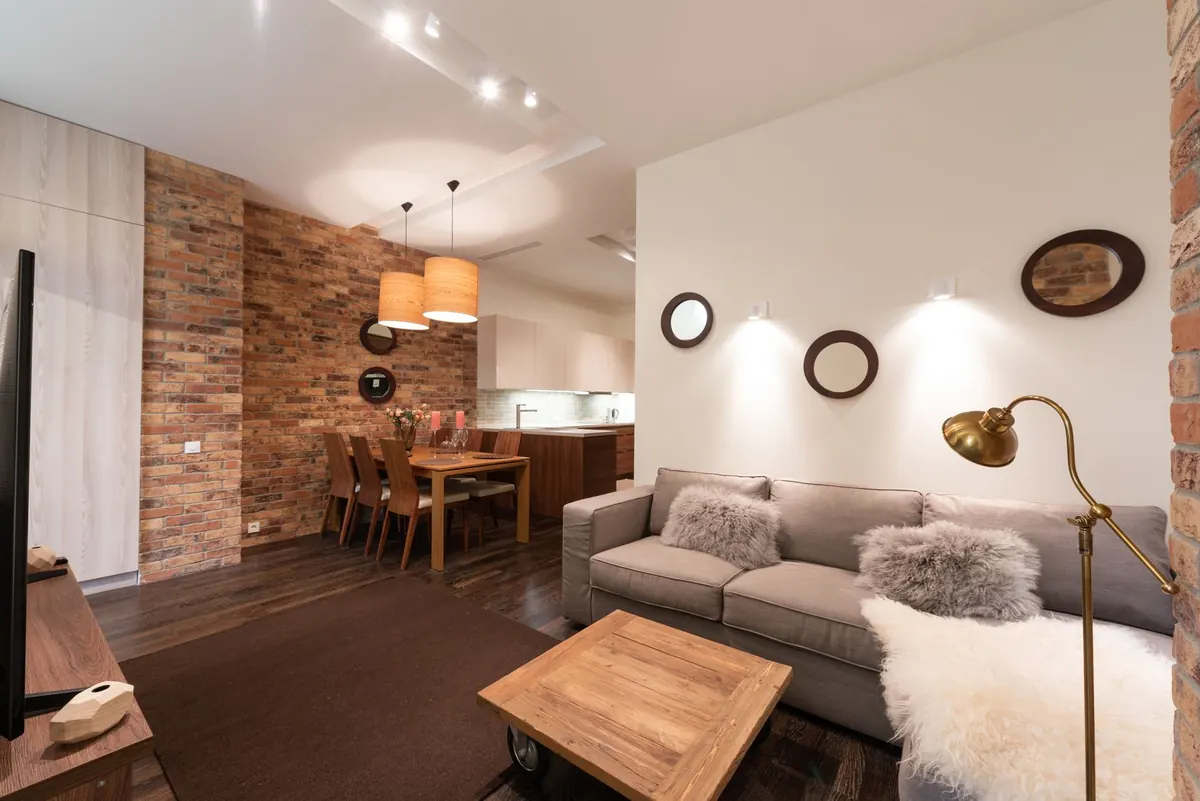
A farmhouse table with a century of knife marks. A sofa that arrived flat-packed last spring. Put them in the same room and one of two things happens. The space reads as layered and lived-in, or it reads like a staging area for a house clearance. The furniture is rarely the problem. What separates the two results is proportion, color, texture, and the willingness to leave a little air around the pieces you love. None of it requires a designer or a particular kind of house.
Start With Proportion, Not Age
Antiques tend to be tall, dark and heavy-footed. New furniture tends to be low and light. That mismatch is usually what people are reacting to when they say a room feels off, even when every individual piece is lovely.
Walk to your doorway and look in. Note the two heaviest things you see. If they sit on the same sightline, one of them needs to move. A tall walnut armoire and a deep leather wing chair placed together will squeeze a room that is perfectly generous on paper. Put the tall piece alone against a wall and let the low pieces gather elsewhere.
Build a height ladder instead of a jumble. A sofa back sits around 32 inches, a dining table around 30, a sideboard around 36, an armoire anywhere from 70 upward. Give each rung of that ladder one home in the room, and the eye has somewhere to travel. Two pieces of the same height side by side flatten a wall; a tall piece, a medium piece, and a low one with a gap between them read as calm.
Let Color Do the Bridging Work
Most cluttered-feeling rustic rooms are not overcrowded. They are over-colored. Three wood tones, a painted white, a black iron, and a red kilim will fight no matter how good each item is on its own.
Settle on three colors: a wall neutral, one dominant wood tone, and an accent you can repeat. Then make the wood tone appear at least twice. If your new table is pale oak and the inherited dresser is dark walnut, a mid-tone floor, a jute rug, or a natural linen sofa will bridge them so the two extremes look intentional.
Buy new pieces as the quiet ones. Solid, mid-value upholstery in oatmeal, clay, or soft grey lets an old piece with a century of patina be the thing people notice. Patterns belong on textiles you can move, not on the largest object in the room.
One small trick worth trying
Find a color hidden inside the antique — the inside of a drawer, a chipped layer of paint, the tone of the wood where the sun has not reached. Have that color mixed and use it on a wall or on a new piece of furniture. The connection is subtle and nobody will be able to name why the room holds together.
Contrast Texture and Repeat Finish
New furniture has an even, machine-refined surface. Antiques have patina, softened edges and a bit of shine in unexpected places. If everything in the room is glossy, the room glares. If everything is matte and chalky, it goes flat.
Aim for one matte, one rough and one soft element in each grouping. Polished mahogany against a lime-washed wall. Raw linen beside waxed oak. Antique brass handles against matte black iron legs. These contrasts cost nothing and do more for a room than another cushion.
Textiles are the easiest lever. Wool, linen, jute and a single piece of velvet will give you all four surfaces you need. Keep the palette tight and let the materials argue instead of the colors.
Give the Room Deliberate Empty Space
The cluttered feeling usually comes from too many small objects, not too many large ones. A room with four big pieces and bare walls often feels more spacious than one with two big pieces and twelve surfaces covered.
Leave gaps. Not every wall needs art, and no wall needs art in a symmetrical row of five. Let a long wall stay partly bare so the one old mirror you love has somewhere to be seen. Keep at least one corner of the room genuinely empty, and keep the paths clear — if you have to turn sideways to get past the coffee table, the table is in the wrong place.
Then edit the surfaces. Take one object off every horizontal plane in the room and see whether you miss it. You usually will not. A sideboard with a lamp and a bowl feels considered; the same sideboard with a lamp, a bowl, three candlesticks, a jug and a stack of magazines feels like a shelf in a shop.
Run Every New Piece Through Three Questions
Before you buy, and especially before you carry something home because it was a bargain, put it through a short filter.
- Does it repeat a color already in the room? If not, can you name where it will be repeated a second time?
- Is its height different from its neighbors? A piece that matches the height of everything around it will disappear or crowd, rarely in between.
- Does it have a job? Holding books, lighting a corner, seating a person, storing linen. Decorative is a job only once.
If two of the three answers are no, wait a week. Most of the clutter in rustic rooms arrives on a Saturday afternoon and stays for a decade.
Where new pieces earn their keep
Let new furniture take the jobs that need comfort, safety and daily abuse: sofas, mattresses, desk chairs, rugs in high-traffic spots. Let antiques take the jobs that suit them: storage, tables, mirrors, frames, small chairs that only need to hold a folded blanket. A new upholstered chair beside an old scrubbed table looks like a decision. An old chair that nobody dares sit on looks like a museum.
A Weekend Reset You Can Actually Finish
You do not need to empty the house. Empty one corner, one wall, or one sideboard, and put back only what you genuinely use or genuinely love. Move the tallest piece so it stands alone. Repeat your main wood tone somewhere it was missing. Add one rough texture and remove one small object from every surface. Then stand in the doorway and check whether your eye has somewhere to rest.
- One tall piece per wall, with space on either side.
- One dark anchor per sightline from the door.
- Three colors, one dominant wood tone, repeated at least twice.
- One empty corner and one partly bare wall.
- Nothing on a surface that you have not touched in a year.
Do that, and the antiques will read as history rather than stock, and the new pieces will read as comfort rather than filler. The room gets quieter as it gets fuller.
Photo: pixel2013 / Pixabay
Related posts
More stories you’ll love reading