


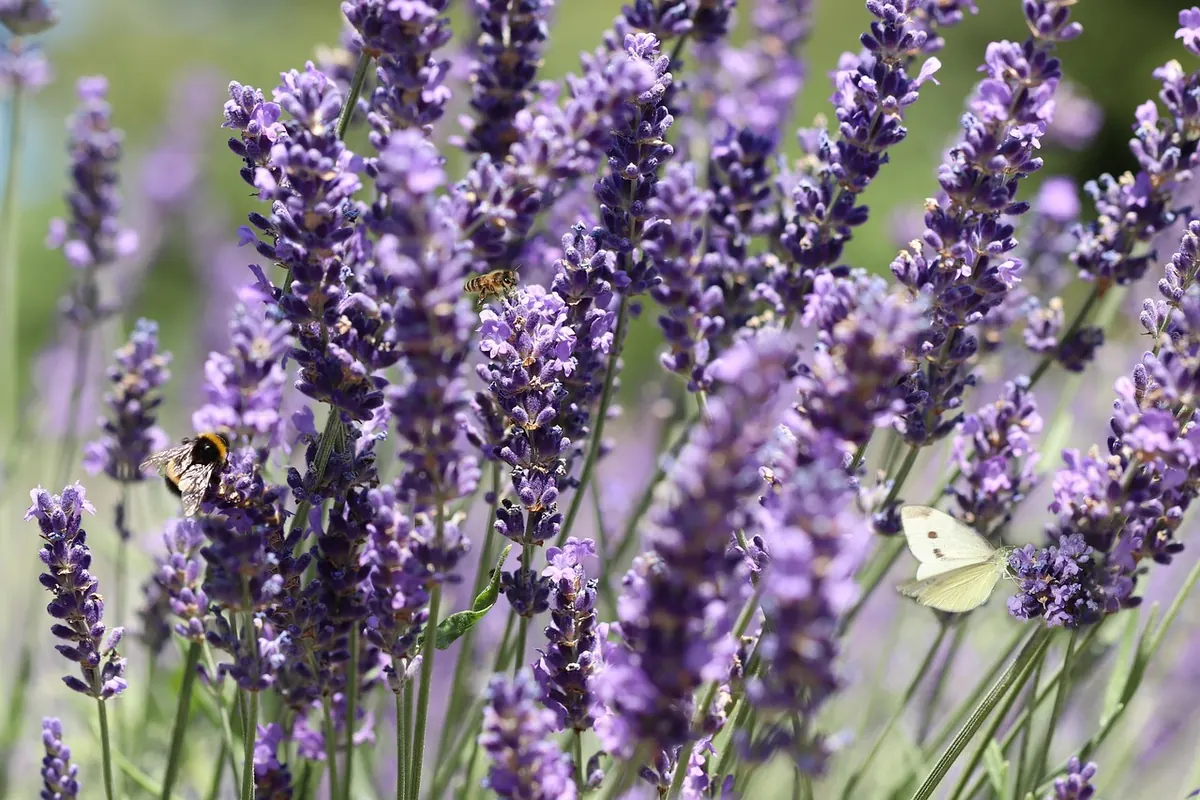
Lavender belongs in a country garden the way a dry-stone wall does. A row along the path to the gate, a low hedge around the herb bed, a few plants spilling over a bank of gravel — it looks effortless, and that is exactly the trouble. Lavender is generous in its first summer and unforgiving afterwards. The plants that go grey and woody in the middle, flop open after heavy rain, or quietly disappear over a wet winter are almost never unlucky. They were planted badly, or left alone two years too long. The mistakes are consistent, which is good news: learn the handful of ways lavender usually goes wrong and you can avoid all of them in an afternoon.
The first mistake is nearly always drainage
Lavender comes from stony hillsides around the Mediterranean, where rain arrives in bursts and runs straight through. Its roots want air as much as water. A plant sitting in wet soil through winter rots from the base upward, and by the time the foliage yellows the roots have already gone. Cold rarely kills lavender on its own. Wet cold does.
A two-minute drainage test
Before you buy anything, dig a hole the depth of a spade in the spot you have chosen and fill it with water. If it is still full two hours later, lavender will struggle there. Choose somewhere else, or commit to raising the planting area.
Planting on a mound
On heavy clay or in a low corner of the garden, the fix is height, not compost.
- Loosen the soil over a wide area — wider than seems necessary — and fork in a generous amount of horticultural grit.
- Build a mound of topsoil and grit about 15cm high and twice the width of the rootball.
- Set the plant in with the crown, where the stems meet the roots, sitting slightly above the surrounding soil.
- Firm gently, water once, then top the mound with gravel.
Do not dig a deep pocket of rich compost into clay and plant into that. You have made a bucket. It fills in winter and the roots drown.
Too little sun and too much shade
Give lavender the sun for most of the day. Six hours of direct light is a bare minimum; eight or more is what it actually wants. The north side of a wall, the shade of a mature apple tree, a bed that is bright in June and dark by August — all of these produce thin, leaning plants with few flowers. Reflected heat from stone or gravel helps, which is part of why lavender looks so right on a sunny terrace. If your garden is cool and damp rather than dry and hot, stick to Lavandula angustifolia, the English lavenders. They are the hardiest and the most reliable through a northern winter.
Feeding it like a vegetable
Lavender is a plant of poor ground. Rich soil, manure, garden compost dug in at planting, a general-purpose feed in spring — all of it encourages soft, leafy growth that flops, splits in wind and blackens in frost. You want the opposite: lean, gritty, free-draining soil, ideally on the alkaline side. If your soil is very acid, a handful of garden lime raked in before planting will help. Otherwise, resist the urge to be kind. The meanest corner of the garden, the strip beside a gravel path, the top of a low retaining wall — lavender will take those and ask for nothing more.
Crowding plants too close together
Crowded lavender is damp lavender. Plants set too close trap still air around the base, which invites grey mould and produces the bare, woody middles that make a bed look tired by its third year. Space English lavenders roughly 30–40cm apart, and the taller Lavandula x intermedia hybrids 45–60cm apart, measured from stem to stem. If you are planting a hedge, work at the tighter end of that range and accept that you will be trimming twice a year to keep it dense.
Two related mistakes belong here. Do not plant lavender in lawn: it loses to the grass for water and loses its top to the strimmer. And do not tuck a plant into a border "for now" while you decide where it should really go. It will sulk, stretch, and be twice as hard to move.
Watering and mulching in the wrong way
New plants need help. Water them well at planting and keep them watered through their first dry summer, soaking the ground rather than sprinkling the leaves. Once established, lavender in open ground rarely needs watering at all, and watering it because everything else is getting some does more harm than good. Containers are different: pots dry out fast, so water regularly in summer, but never leave a saucer of standing water underneath.
Mulch with gravel, grit or crushed stone, about 5cm deep, pulled back a little from the crown of each plant. Bark chips, leaf mould and manure hold moisture against the stems, which is the last thing lavender wants. If you already garden with a bark-mulched border, scrape it back before you plant.
Pruning too late, too hard, or not at all
This is where most country gardens lose their lavender. Left alone, a plant opens into a woody star, the middle goes bare, and flowers appear only on the outer fringe. It happens within three or four years, and it is entirely preventable.
Cut back every year, straight after flowering. Take off the spent flower stems and trim the leafy growth by about a third, working around the plant to keep a soft dome. The rule that matters: stay within the green. Lavender rarely regrows from the old, bare wood at the base, so cutting into a thick grey stem usually leaves a permanent hole.
Timing depends on your winters. In mild climates, prune in late summer or early autumn, while there is still time for the plant to harden. Where winters are cold and wet, leave the spent flower stems standing for frost protection and do the real trim in April, once new growth is showing. A light tidy in spring is fine either way. A hard cut in October is not.
Buying the wrong lavender for the spot
The three common groups are not interchangeable. Lavandula angustifolia is compact and hardy, the best choice for cold gardens and low hedges. Lavandula x intermedia, the lavandins, are bigger, flower later and are what you want for cutting and drying. Lavandula stoechas, with its little purple rabbit ears, is the showiest and the tenderest: it needs sharp drainage, mild winters and a sheltered spot, and it will not forgive a wet February the way the others might. Read the label before you fall for the flowers.
What to fix first
If you already have struggling lavender, work in order. Drainage and sunlight first, because nothing else matters if those are wrong. Then airflow and spacing, which usually means lifting and replanting rather than coaxing. Pruning comes last: it will rescue a splayed, leggy plant, but it cannot save a drowned one. Get the ground and the position right, and the rest of the year is mostly a matter of standing back and letting the bees do the work.
Photo: Nennieinszweidrei / Pixabay
Related posts
More stories you’ll love reading